Payment gateway integration: a practical guide
Pick the provider that fits how you collect money, keep card data off your servers, trust the webhooks, plan for disputes, and design a checkout people finish.
Blog
Notes on choosing, building and running business software, from the team that writes and hosts eight systems.
Pick the provider that fits how you collect money, keep card data off your servers, trust the webhooks, plan for disputes, and design a checkout people finish.
Start from the decision, not the data: fewer numbers, each with an owner, a threshold and a one-click path to the records behind it.

Seats that can never be sold twice, prices that follow group size and season, clear deposit and cancellation rules, partners on the same inventory, and a checkout that works on a phone.

Scope sets the clock, slow decisions stretch it, phasing gets value out sooner, and a few weeks of discovery saves months of rework.
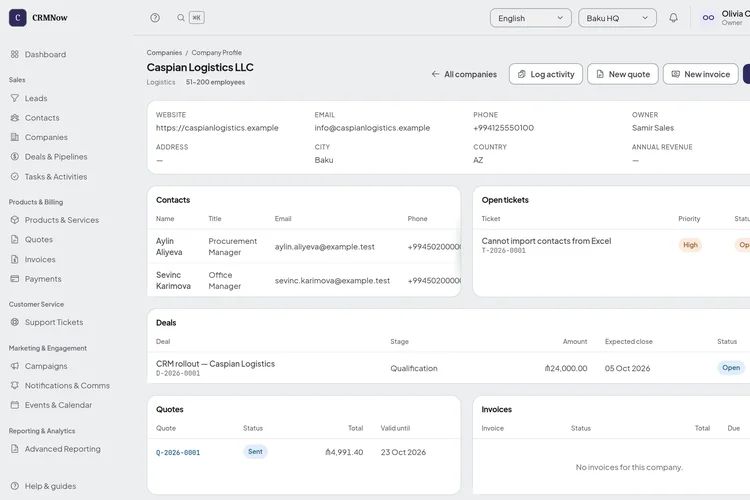
Keep the whole customer in one record, make renewals and check-ins happen on schedule, segment by what predicts churn, and act on the warning signs while there is time.
Track every unit where it sits, reorder before the shelf is empty, connect stock to sales and purchasing, and report on what to buy and what to clear.

Match the technology to the job and the people who will maintain it, weigh the trade-offs honestly, and know what to ask a vendor before you commit.
What each core module does, how to map them to the work your team repeats, why a full suite wastes money, and where a custom module earns its place.

What the Security Rule asks of clinic software, where Business Associate Agreements fit, and why safeguards are cheaper to design in than to add later.
Turning vague ideas into testable requirements, running a discovery workshop, prioritising the first release and keeping scope creep out.
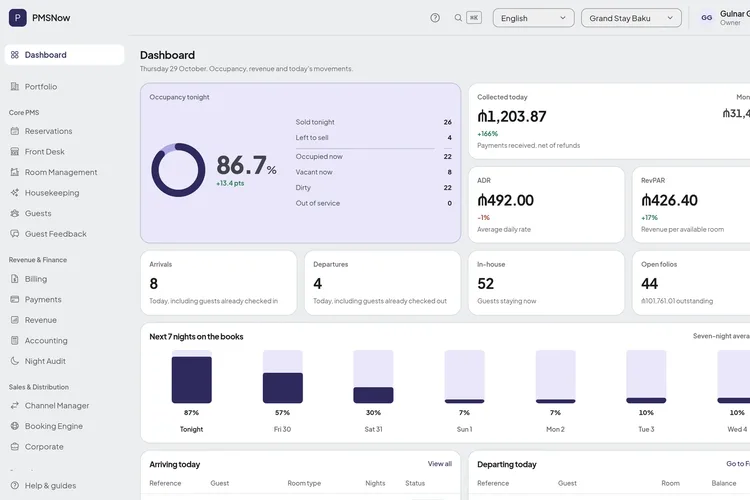
How hosted and on-premise systems compare on uptime, updates, cost and integrations, and how to move without losing your data.
Scope one workflow, cut the features that can wait, prove it with the people who use it, and keep the data model ready for what comes next.

Which tasks to automate first, why the map comes before the build, how connected systems remove manual steps, and how to prove the saving.

Audit first, cut over last. How to map what you have, move it in phases, clean the data on the way, and bring your teams along.
A CRM lives or dies on whether it makes a rep's day easier. How to design around real selling, automate the busywork, and earn adoption instead of demanding it.
What a multi-property system does, which features vary most between products, and the signs that it is time to stop merging spreadsheets.

Reminders fix forgetting, a fair deposit fixes indifference, and a waitlist refills what still cancels. The five changes that move the number, and what to track.
Design the connections before the screens and every feature is reachable by other software. What that means, how it limits lock-in, and why integrations belong in the brief.

Departures, allotments and groups are where generic tools break. The capabilities that matter, the questions to ask a vendor, and what to test before you commit.
Buy for common needs, build for the workflow you compete on. The trade-offs, the hidden costs on both sides, and four questions that settle the choice.
One rate change reaching every booking site, and a sold room closing everywhere at once. How the sync works, what to ask before you connect, and how to measure the return.
Errors nobody catches, versions nobody trusts and data only one team can see. How to tell when the file has become the risk, and how to move off it in stages.

Scope moves the price far more than the year does. What drives the number, which pricing model fits, the ranges to expect, and the running costs most quotes leave out.
Availability first, payments second, and the database, not the browser, as the last word on who got the slot. Then the mobile checkout that decides whether visitors finish.

Packaged CRMs win on speed; a custom build wins on fit. Where each one breaks down, how the cost compares over several years, and a simple test for choosing.

Booking, the clinical record and billing on one patient record, safeguards built in rather than bolted on, and integrations that write back to the right chart.

What a modern property management system covers, the integrations that decide whether it works, when to build rather than buy, and how to scope a first release.

Match the provider to your industry, your workflows and your appetite for risk, not to a feature list. The questions to ask, and the red flags to walk away from.

Start from the classroom, not the feature list: the four modules that decide adoption, how to map real workflows, and how to roll it out so staff keep using it.
The guides are single-page checklists for one decision each: a hotel PMS, a school system, outgrowing spreadsheets, a CRM for a small team. For work we built to order, see the case studies.